Doi Angkhang's Paper Surprise
During my trip through North Thailand earlier this month with my friend Frans, we encountered something unusual.

While driving along to Doi Angkhang I noticed something happening in a shop and we decided to have a quick look.
This turned into a bit longer than planned as Frans even admitted - that despite driving here a few times previously - he had never seen anything like it.

Over the years, I visited Bangkok’s Chinatown countless times and am well familiar with the shops selling paper effigies and joss paper.
Quite fascinating to see small paper-made copies of almost anything, from houses to kitchenware to iPhones, all to be destined to go up in flames during the cremations!
In Northern Thailand, the funeral custom involves the use of cremation structures that are specifically built for the service and are burned along with the deceased's coffin.

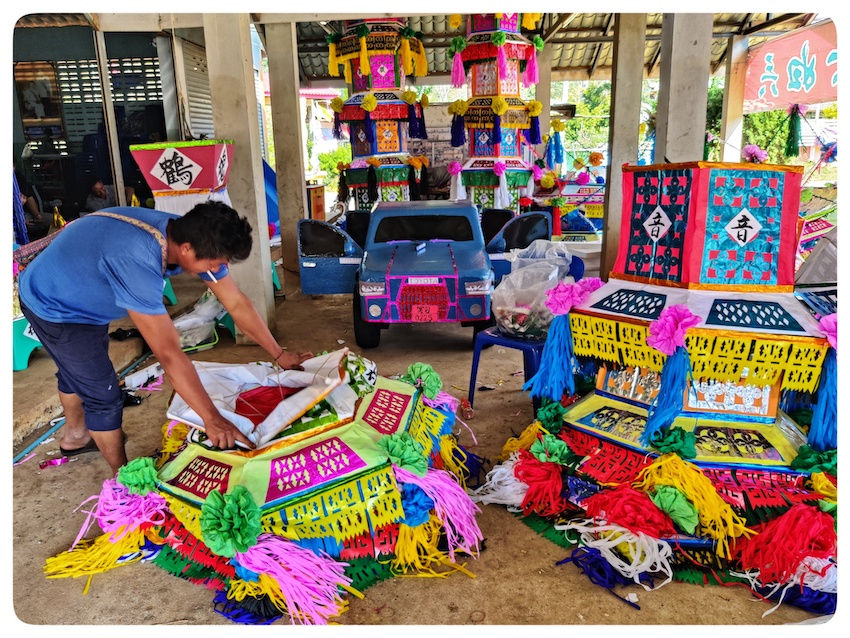
But this here was something completely different as the scale of the effigies was huge and the objects were not the usual either…

First was a colourful row of horses, complete with saddle bags, perhaps a tribute to the Kuomintang (KMT) heritage in this part of Thailand? (*)
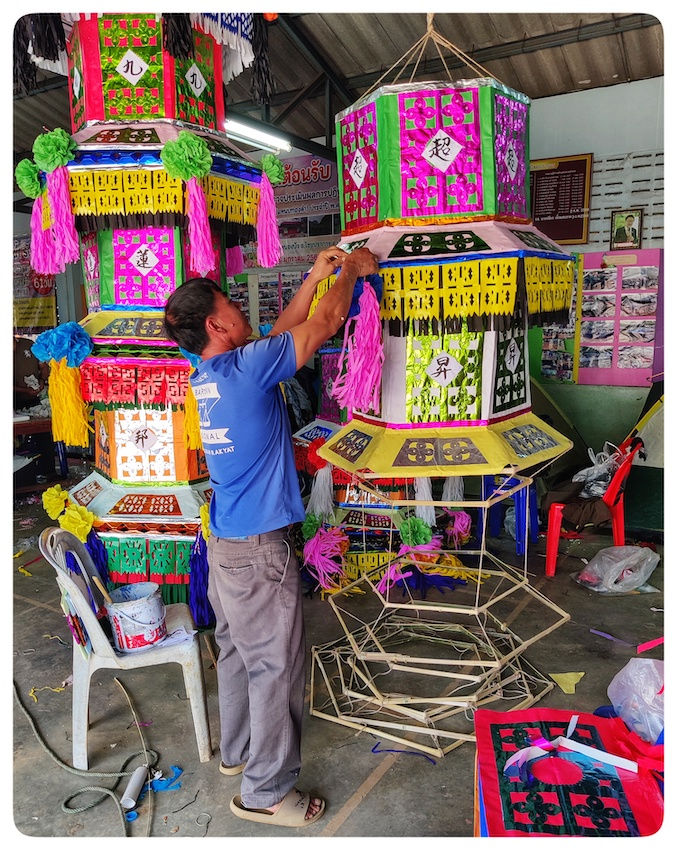


Also, brightly crepe-papered tower structures, birds, cars, and more were in the process of being put together.


Everything would be burned at the same time during the funeral, according to the workers.


We wandered around, talked a bit with the guys and were very impressed by their work!

Even the inside of the paper pickup was quite detailed…

Amazing Thailand indeed!
(*) The KMT (Kuomintang) presence in Northern Thailand can be traced back to remnants of Chinese Nationalist soldiers who fled China after the Communist victory in 1949, eventually settling in remote border areas like Mae Salong in the 1960s. They initially lived as stateless refugees, later forming alliances with the Thai government by fighting Thai Communists (CPT), helping secure Thai borders in exchange for permission to stay and eventually gaining citizenship, transforming into agricultural communities known for tea, coffee, and tourism, preserving their distinct Chinese Yunnanese culture.


Great post and very nice and good information with even better pics. Thanks Koen!!
Fascinating! Thank you, Koen!